
Lock Installation and Replacement for Orlando Doors
A new lock has to suit the door it goes on, not only the look you’re after. We put in deadbolts, handle sets, levers and patio door locks for homes, rentals and offices, and we replace the ones that are worn out or broken. A few measurements on the door you have decide what will fit.
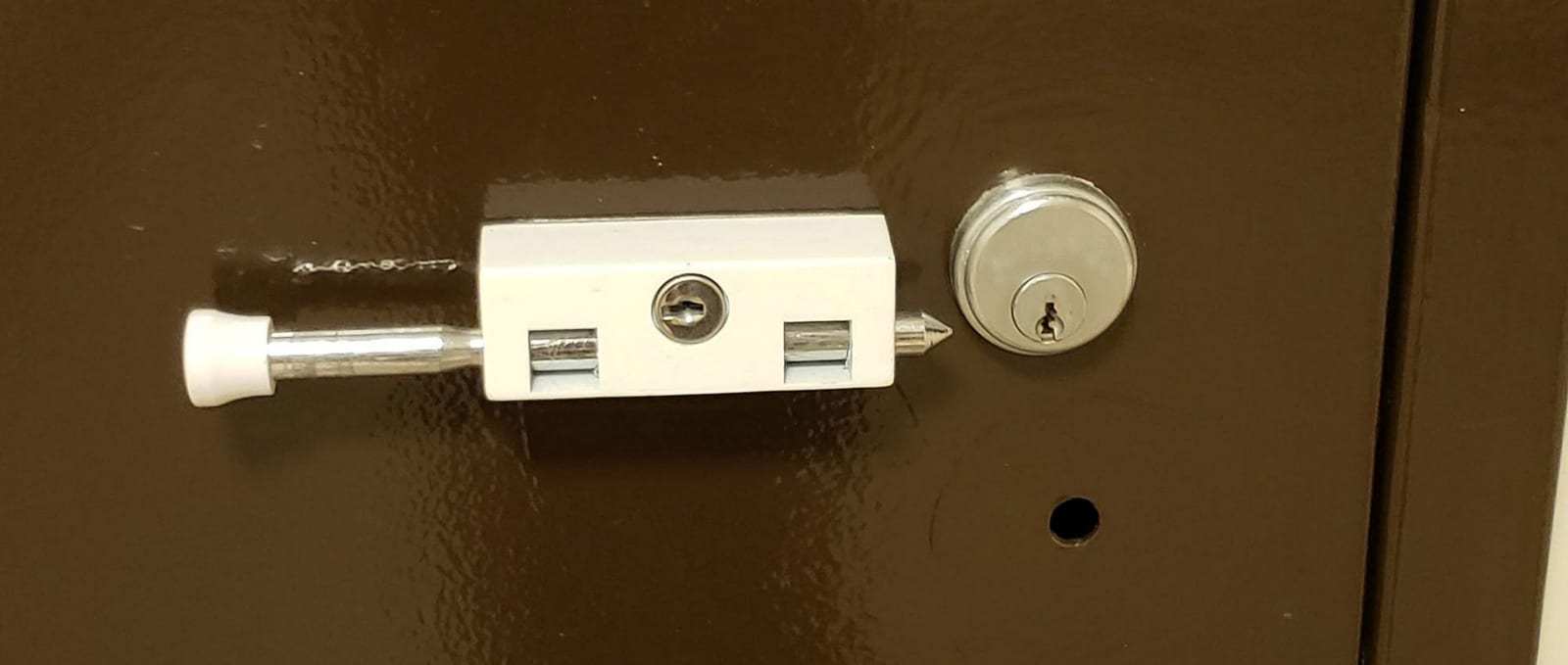
The Hardware We Fit
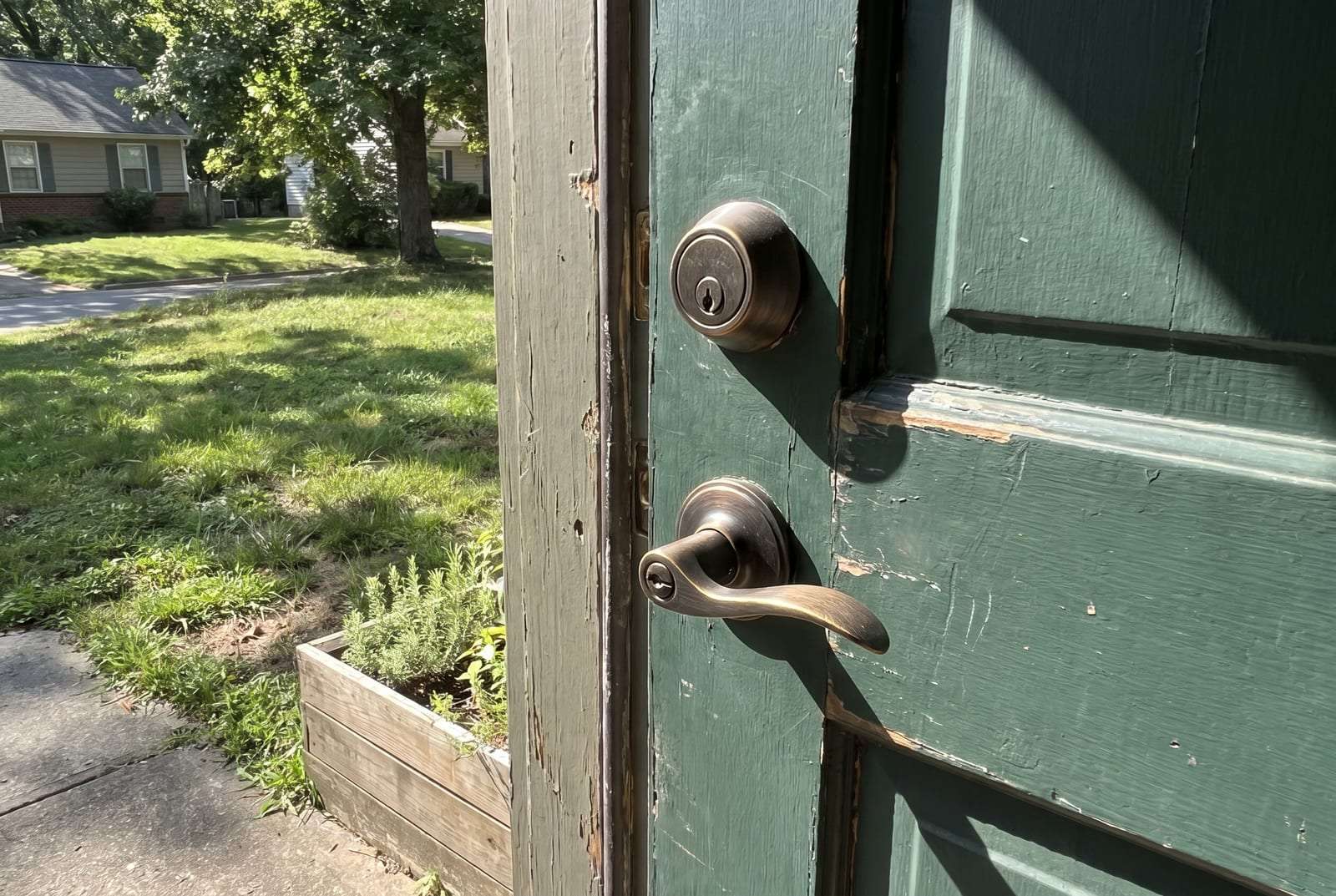
A deadbolt does the real work on an entry door. Its solid bolt moves only when the key or the thumb turn moves it, so there’s no spring latch to slip. Most front doors pair one with a knob, a lever or a handle set.
A handle set is the long grip with a thumb latch outside and a knob or lever inside, usually matched to the deadbolt over it. Together they set the look of the front of the house.
- Deadbolts for front, back and side doors, and the door in from the garage.
- Handle sets with a matching deadbolt for front doors.
- Levers, easier than knobs for full arms, wet hands and stiff fingers, including keyed levers for office doors.
- Storm door locks, sized for the narrow frame of a storm or screen door.
- Patio door locks for sliders and hinged glass doors, along with a second lock at the foot of a slider.
When a lock is replaced, the holes it leaves get checked against the new one, and a split edge or a chewed-up strike is worth fixing before the new lock goes in. If the lock still works well and you only need new keys, a rekey may be all it takes.
Matching the Lock to the Door
Different doors take different locks, and each kind has its own trouble spots.
| Door type | Common lock | Things to check before installing |
|---|---|---|
| Wood entry door | Deadbolt with a knob, lever or handle set | Thickness and backset, soft or split wood at the edge, old holes from earlier locks |
| Steel entry door | Deadbolt and lever, or a handle set | Factory hole sizes, the reinforcement inside the edge, room for the handle if a storm door closes in front |
| Glass or patio door | Hook latch on a slider, keyed handle on a hinged glass door | Which way the slider opens, how far the hook reaches into its keeper, the aluminum or vinyl frame, whether the door lifts off its track |
| Interior office door | Keyed lever that locks from the hall | Who should hold a key, whether it locks by key or by button, and that it always opens from inside without one |
Many concrete-block homes around Orlando have aluminum sliders, and a slider’s lock is made for its own frame. The maker’s name on the door or its frame, or a photo of the latch, helps us match it.
Before We Replace a Lock
Four things decide whether a new lock goes straight in or the door needs some work first.
- Door thickness. Most exterior doors are 1-3/4 inches thick and interior doors a little thinner. Older doors can be off either way, and a lock may need a different kit to fit them.
- Backset. That’s the distance from the edge of the door to the center of the round hole the lock sits in. The two usual sizes are 2-3/8 and 2-3/4 inches. Many latches adjust to either one; the ones that don’t have to match.
- Finish. The color and coating: polished brass, aged bronze, satin nickel, black. Matching the hinges keeps the door looking like one set, and a finish made for outdoor use holds its color longer in sun and damp air.
- Existing handing. Handing is which way the door swings and which side its hinges are on. Many levers and handle sets have to be set for the door’s hand, or the lever ends up pointing the wrong way.
Where the Bolt Meets the Frame
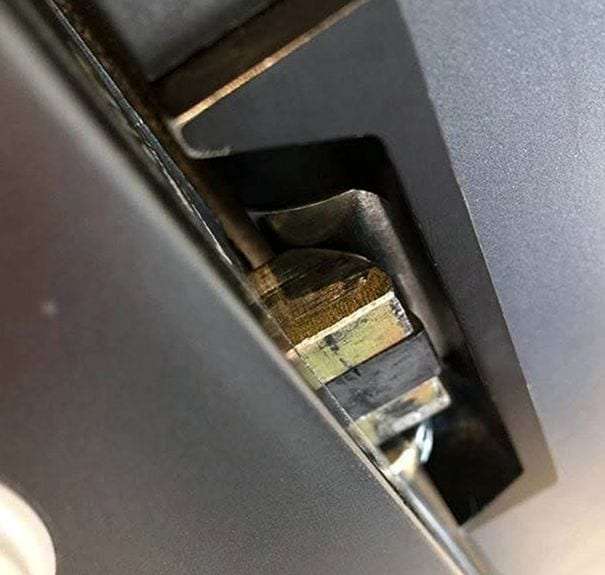
A lock is only as good as the strike it closes into. The bolt should slide all the way into the strike plate in one smooth throw. One that stops short or scrapes the edge is only half locked, and it wears the lock a little more each time.
Doors move. Wood swells in damp weather and shrinks back when it dries, hinges sag, and houses settle. When a bolt starts to drag, the cure is often at the frame: a strike plate moved a hair, a hinge screw long enough to reach the stud, or a door edge eased where it rubs.
New Locks on Old or Out-of-Square Doors
Older doors and doors that have shifted take a little more fitting. Here’s what that usually means.
- Can a new deadbolt go on an old wood door?
Usually, yes. Plenty of the 1920s bungalows in Thornton Park and Lake Eola Heights still have their original wood doors, and many were made for a mortise lock, a box set into a pocket in the door’s edge. A modern deadbolt can often go in beside it or in its place, with the old pocket filled or covered by a plate.
A solid old door is worth keeping. The lock gets fitted to the door, not the other way around.
- My door only latches when I slam it. Will a new lock fix that?
Not by itself. A new lock on a door that’s out of line drags just like the old one did, so the door has to be set right first, at the hinges, the strike or the edge. Then the new lock closes the way it should.
- Will the new lock cover the holes the old one left?
When the backset and the hole sizes match, yes, and most newer locks are made for the standard holes. Older doors are where the surprises turn up: a wider hole, an odd backset or extra holes from a lock two owners back. Those can be filled or covered, and it’s better to know before the new lock is bought.
Still deciding between a deadbolt, a handle set and a keypad? It helps to compare lock types side by side first.
Show us the door, and we’ll fit a lock that suits it.