
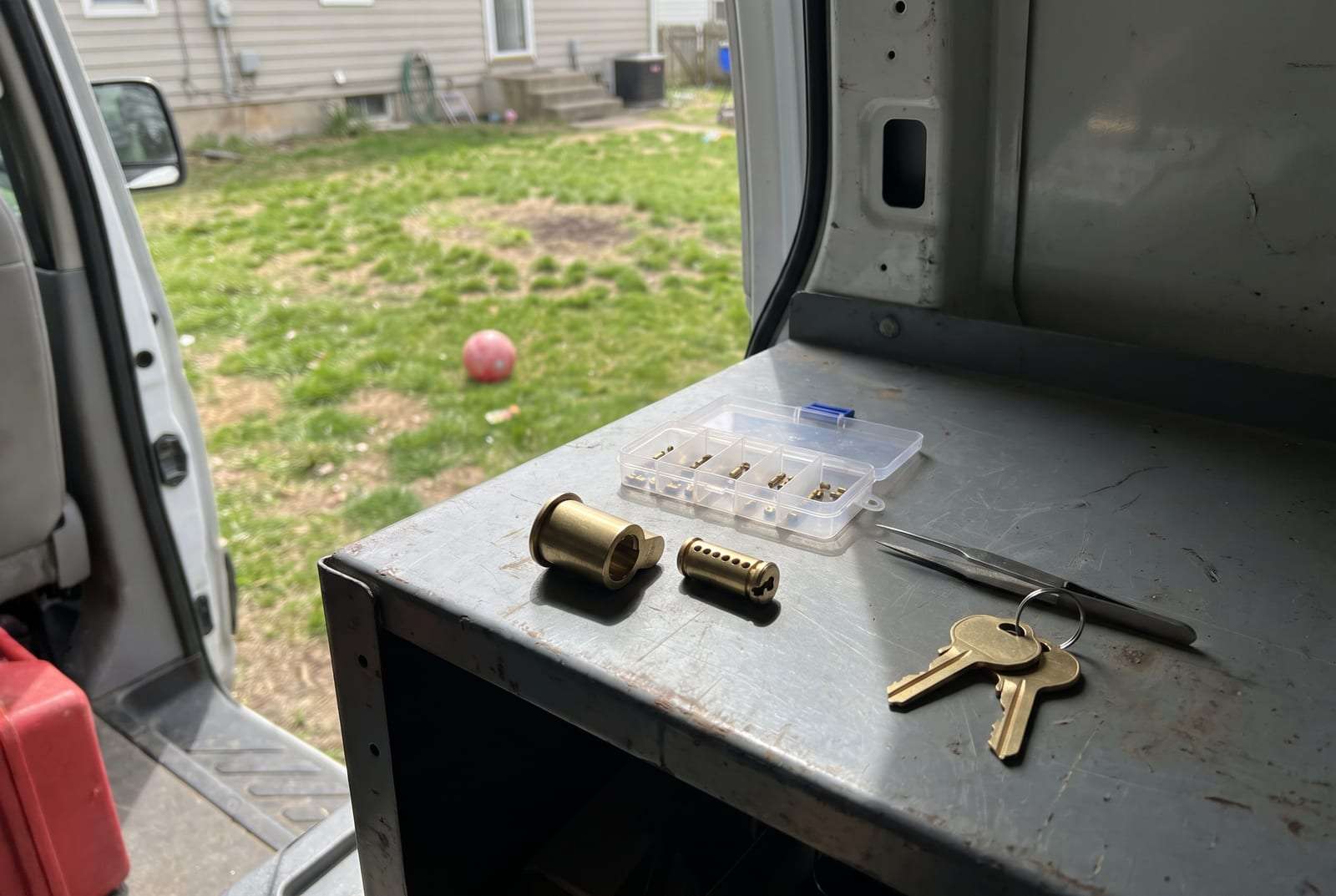
Rekeying
New pins in the lock you have, new keys to match, and the old keys stop turning.
Learn More about RekeyingMost lock calls come down to three kinds of work: changing who has a key, putting in a new lock, or setting up a lock that opens without one. Here’s what each involves and how to tell which one fits the door in front of you.
Each starts from a different question: who should have a key, what the door can take, and how you’d like to open it.
New pins in the lock you have, new keys to match, and the old keys stop turning.
Learn More about Rekeying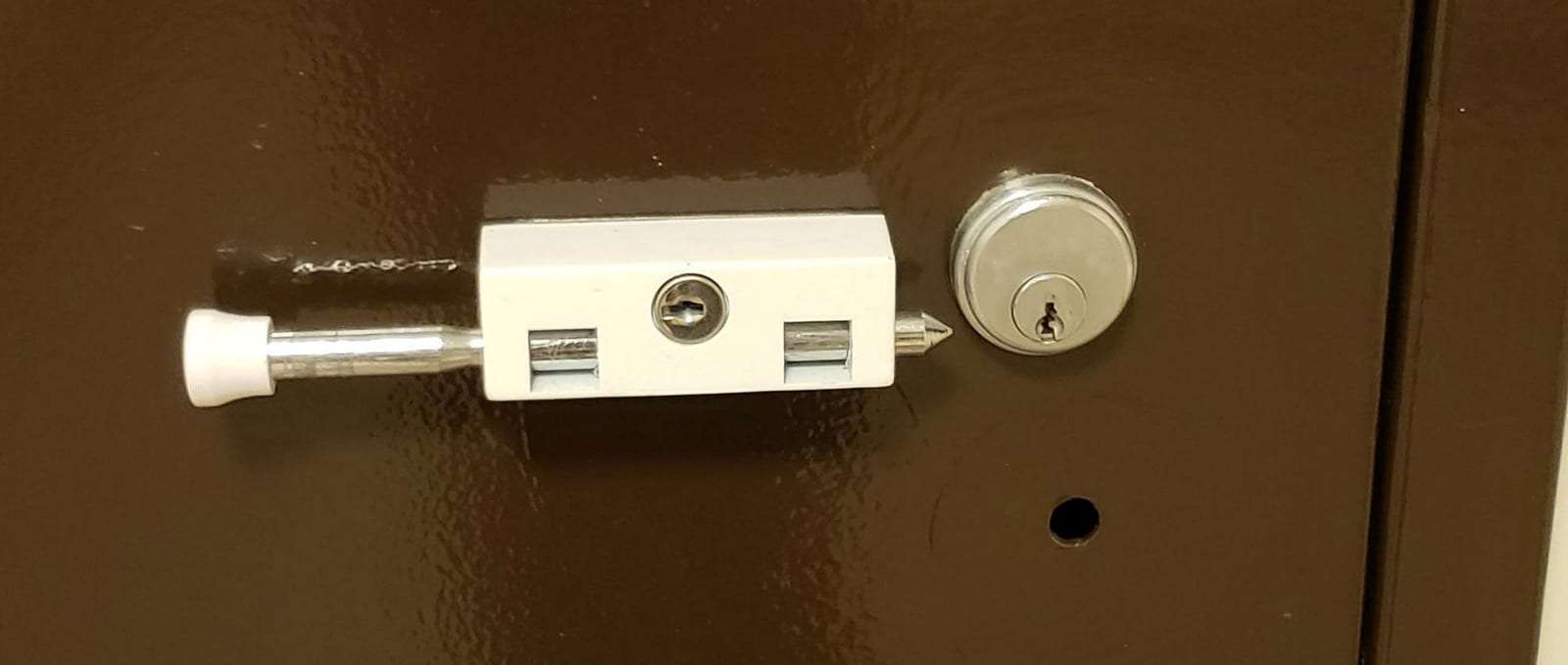
Deadbolts, handle sets, levers and patio door locks, fitted and worked from both sides.
Learn More about Lock Installation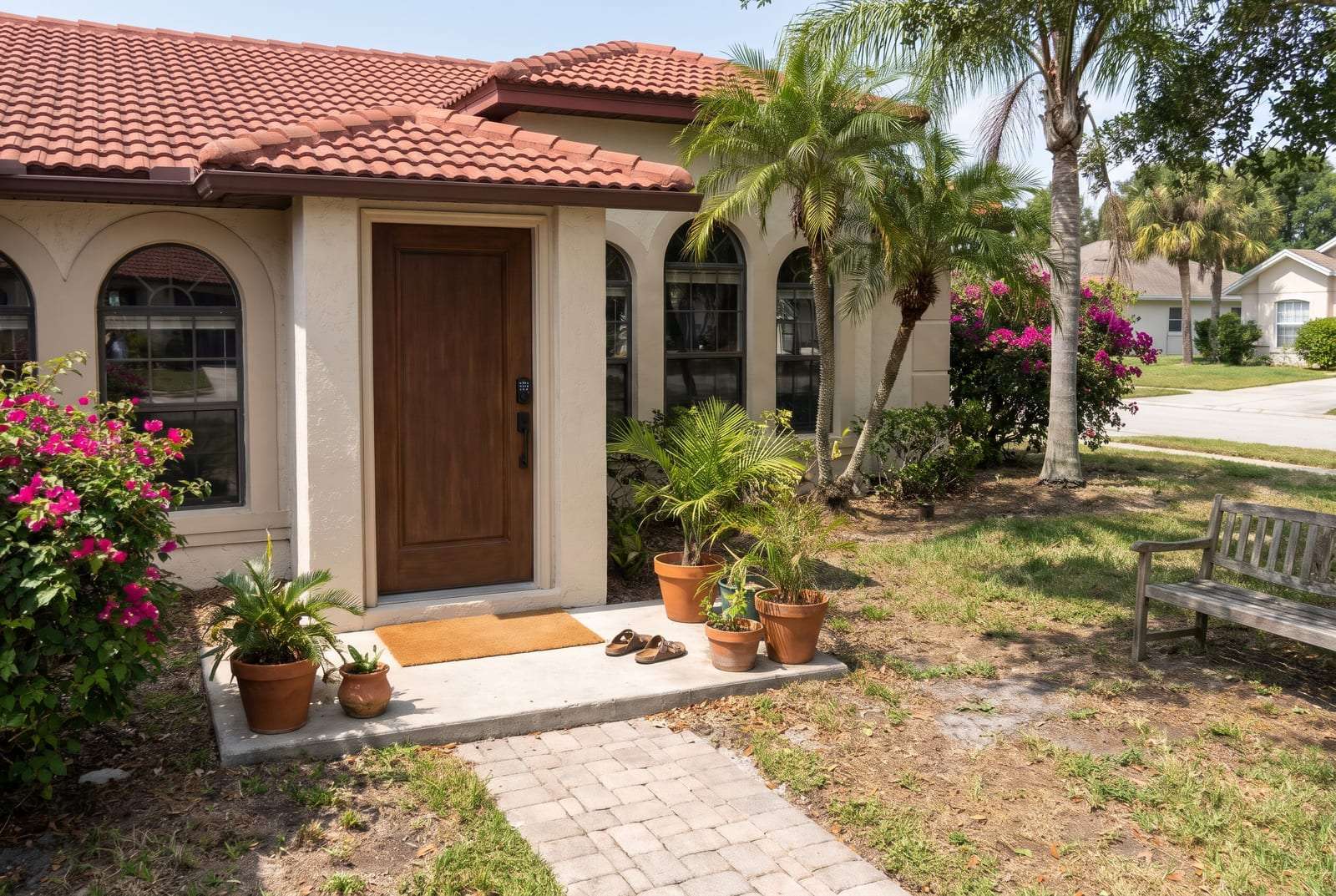
Keypad, Bluetooth and Wi-Fi deadbolts, set up with a backup key that still works.
Learn More about Smart LocksStart with what happened, not with the hardware. The same worn deadbolt can need a rekey in one house and a replacement in the next, depending on what the key and the bolt are doing.
| Your situation | Recommended service | Page link |
|---|---|---|
| Lost keys | Rekey the locks those keys open, so a found key ring is no use to anyone | Rekeying |
| New tenants | Rekey between tenancies and keep a record of every key handed out | Commercial Locks |
| Damaged lock | Replace a forced, cracked or spinning lock and check the strike and frame with it | Lock Installation |
| Upgrading security | A heavier deadbolt, a high-security cylinder or a reinforced strike | Lock Options |
| Keyless entry | A keypad or smart deadbolt on the door you already have | Smart Locks |
If two rows sound like you, that’s normal. A move-in often calls for a rekey on the front door and a new lock on the patio slider that never latched right.
The same three kinds of work show up in different places. Pick the one that sounds like your property.
These are the questions that sort one job from another. A short phone call usually settles it.
The key slides in smoothly, turns without forcing, and the bolt moves all the way out and back. If the only problem is who has a key, rekeying is the right job. It keeps the hardware you have and changes the pins inside the cylinder.
When the lock itself is sound but something around it is off. A bolt that drags on the strike plate, a latch that misses because the door sagged, or a key that sticks after a summer of humidity can often be put right with an adjustment, a cleaning or a new strike, not a new lock.
When the cylinder spins, the housing is cracked, the bolt won’t stay thrown, or the lock was forced in a break-in. Replace it too when you want something the old lock can’t do, like a keypad, a sturdier deadbolt or levers that are easier on the hands.
Usually, yes. Describe what the key and the bolt are doing when you call. That narrows it down before anyone drives over, and the visit settles the rest.
Describe what the key is doing, and we’ll match it to the right job.