
Lock Rekeying for Orlando Homes and Rentals
When a key is out there that shouldn’t be, the lock doesn’t have to go. A rekey swaps the small pins inside the cylinder, you get new keys to match, and the old ones won’t turn it anymore. The deadbolt, the handle and the finish on your door stay exactly as they are.
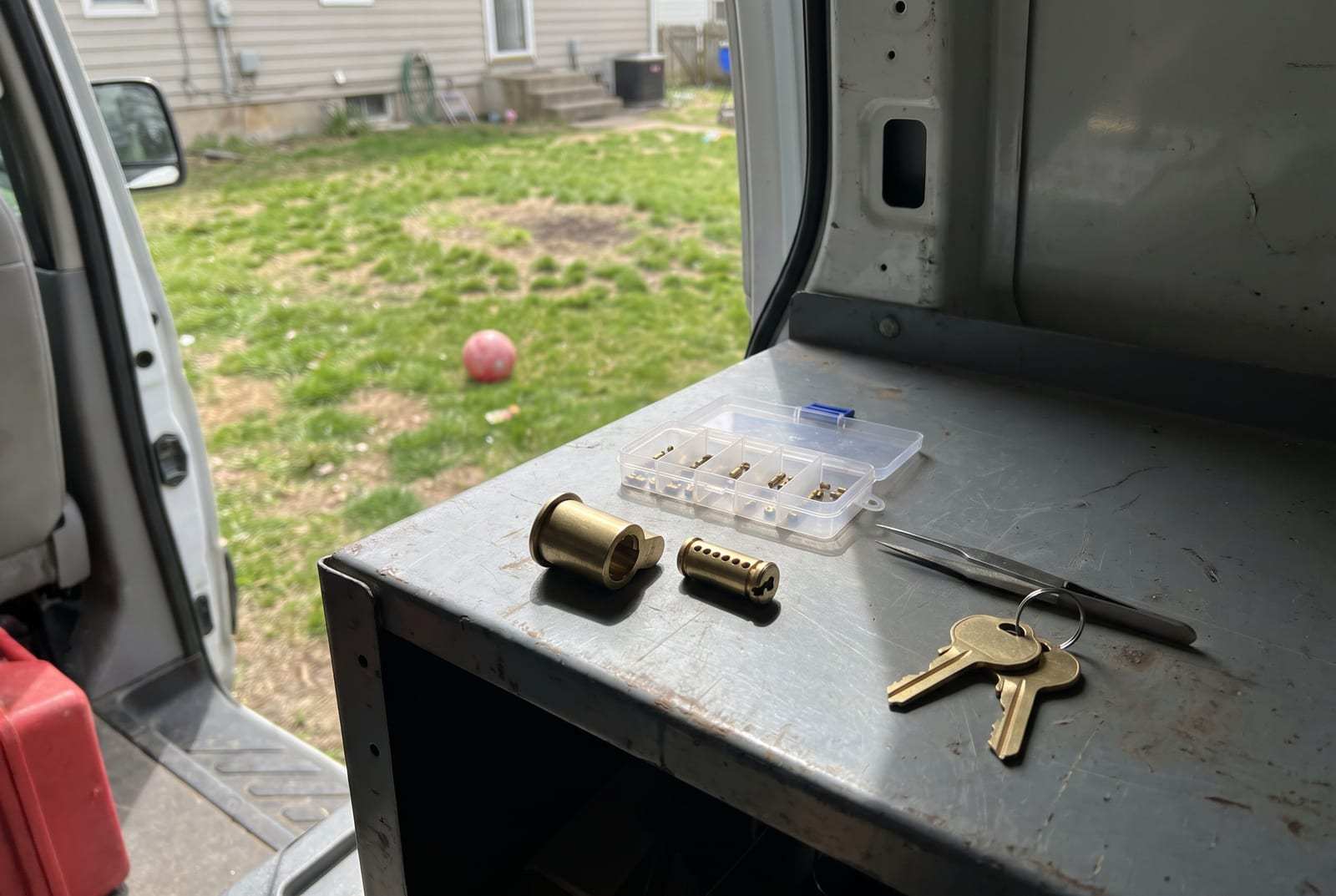
Same Lock, Different Key
Most locks on houses and apartments are pin tumbler locks. Inside the cylinder sits a plug, the part your key turns, and a row of tiny spring-loaded pins cut to different lengths. The right key lifts every pin to just the right height, the pins line up at the edge of the plug, and it turns. Any other key leaves a pin too high or too low, and the plug won’t budge.
To rekey, a locksmith takes the cylinder out, slides the plug out of its housing and trades the old pins for a new set that matches a new key. Before we pack up, the old key gets one last try, and it shouldn’t move the lock at all.
Every keyed cylinder the old key opens needs the same work. A front door with a deadbolt and a keyed knob has two, and a back door or a garage entry adds more. List them when you call, so none get missed.
What Rekeying Can and Can’t Do
A rekey fixes a key problem, not a hardware problem, and that one idea settles a lot.
- Does rekeying work on every lock?
It works on most keyed locks on a house or a small business: deadbolts, knobs, levers, handle sets and the key cylinders on many smart locks. A few aren’t worth the trouble, like bargain locks whose cylinders don’t come apart cleanly, or locks with restricted keys that only certain dealers can supply.
A lock that’s cracked, worn loose or forced is a different story. New pins won’t fix a tired lock body, so that one gets replaced.
- Is rekeying the same as changing the locks?
Not quite, though the old keys end up just as useless either way. Changing the locks means new hardware: a new deadbolt, a new handle set, sometimes a new strike plate. Rekeying keeps all of that and changes only the pins. Plenty of people say “change the locks” when a rekey is all the door needs, and we’re glad to tell you which one yours calls for.
Weighing a Rekey Against a New Lock
Start with what happened, then look at what the lock is doing. Between the two, the answer usually shows itself.
| Situation | Rekey | Replace | Why |
|---|---|---|---|
| Moved into a house or condo | Every outside door, garage entry included | Only for a new style or a feature you want | The last owner, an agent or a contractor may still hold a key. |
| Lost a key ring | Each door those keys fit | Not needed while the locks work well | Once the pins change, a found key opens nothing. |
| Tenant or roommate moved out | Between one tenancy and the next | When years of use have worn the lock | Copies get made and passed around, and they rarely all come back. |
| Lock forced in a break-in | Not enough on its own | The lock, with a look at the strike and frame | A forced lock can be bent inside, and new pins won’t straighten it. |
| Want one key for every door | Yes, if the locks share a keyway | Any cylinder that can’t take the shared key | A key has to fit the slot before its cuts matter. |
| Want a keypad or phone entry | Can’t add keyless entry | With a keypad or smart deadbolt | Codes and apps live in the hardware, so the lock has to change. |
When the lock itself has to go, it pays to compare lock types before picking the new one.
Good Times to Rekey
If any of these sounds like your house, a rekey is worth a call.
- You’ve just moved in. The last owner, the agent, a cleaner or a contractor may still have a key, and nobody can give you a full count.
- Keys went missing, especially along with a wallet, a bag or anything else that shows your address.
- A tenancy ended. A tenant, a roommate or a house-sitter moved on, and copies tend to outlast the people who made them.
- A key may have been copied by someone you don’t know: a spare left under the mat, or a key ring handed to a valet or a contractor for the week.
- You simply can’t account for every key. A rekey settles the question.
Renting a downtown apartment or condo? Check with your landlord or the association first. Many leases say who may rekey a lock and ask for a copy of the new key.
One Key for the Whole House
Rekeying can also thin out the keys on your ring. Instead of a new key for each lock, you get one key for all of them.
What “Keyed Alike” Means
Each lock gets pinned to the same key, so the front deadbolt, the back door and the door in from the garage all open with one key.
The catch is the keyway, the shape of the slot the key slides into. Locks from different makers usually have different keyways, so one maker’s key won’t even go into another’s lock. The odd one out needs a cylinder or a new lock that takes the shared key.
Offices and rental buildings sometimes want the reverse: each door with its own key and one master key that opens them all. That’s a master key system, a different setup from keyed alike.
Enough Keys to Go Around
- How many new keys come with a rekey?
A locksmith usually cuts a set number of keys with each rekey, and more can be cut whenever you need them. Before the visit, count everyone who should have one: family, a sitter, a cleaner, the neighbor who waters the plants. Cutting them all at once beats tracking one person down later.
Whoever had the old keys, we’ll see to it they’re done opening your door.